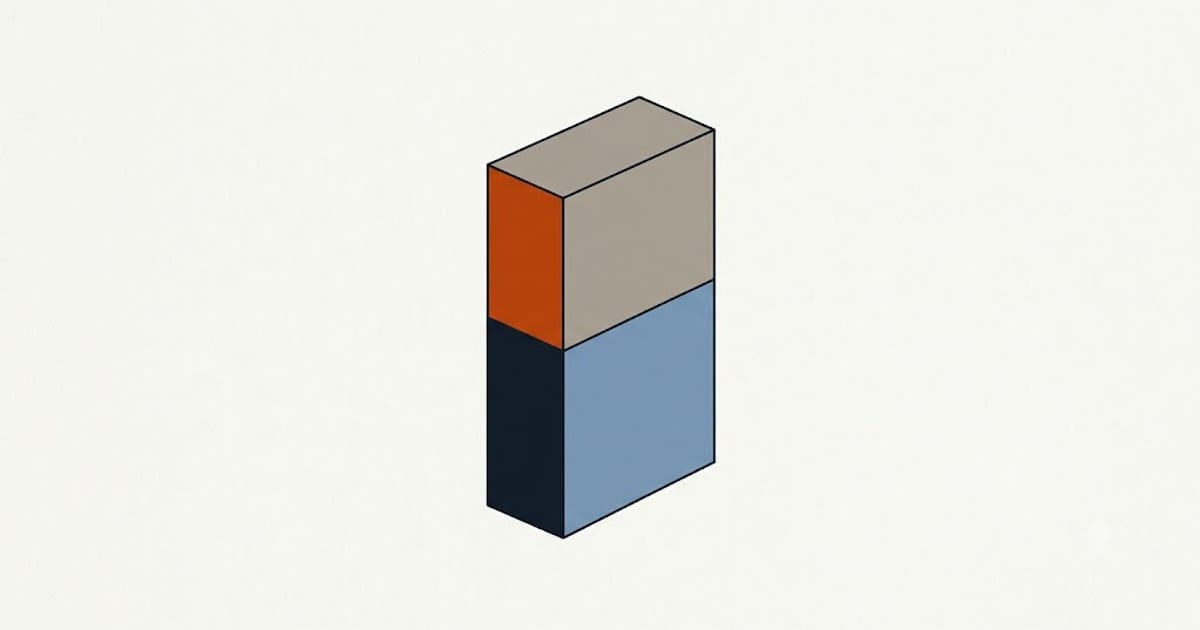
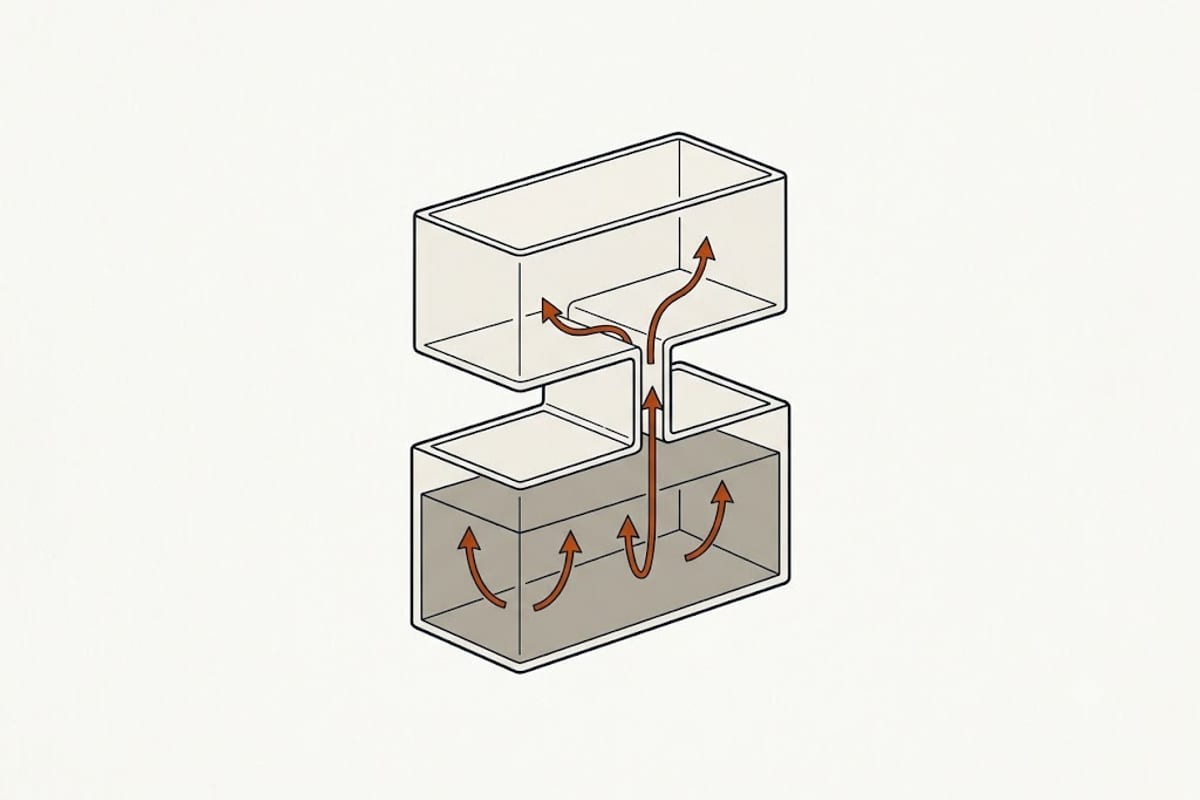
Almost every modern fridge-freezer makes cold in one place — an evaporator, usually in the freezer — and moves some of it to the other compartment with a fan. That single fact splits the diagnosis in half before you touch anything.
So the first question is not "why is it warm". It is: which compartment is still cold?
Freezer cold, fridge warm
The cooling system is working. The problem is moving the cold, and there are three usual causes.
- The evaporator fan has stopped. Open the freezer and listen. On most models the fan runs when the door is closed, so press the door switch and listen for a fan starting. Silence, or a rattle-then-silence, points here.
- The air channel between compartments is blocked — usually by frost, sometimes by a packet pushed against the vent. Look for the vent openings and check nothing is against them.
- The defrost system has failed and the evaporator has iced over. The fan spins, but it is pushing air through a solid block of frost. This is extremely common and it builds gradually: the fridge gets slowly worse over a week or two.
The defrost case has a giveaway. Turn the fridge off for 24 to 48 hours with the doors open, then run it again. If it cools normally for a day or two and then fades again, the ice was the problem and the defrost system — heater, thermostat, or timer — is what actually failed.
Both compartments warm
Now the cooling system itself is suspect.
- Condenser coils thick with dust. At the back or underneath. The system cannot reject heat, so it runs constantly and cools poorly. This is the cheapest fix on the list and it is worth doing before anything else.
- Condenser fan not running. Usually underneath, near the compressor. If it is silent while the compressor is warm and running, the system is overheating.
- Compressor running but not pumping, or a refrigerant leak. Both are sealed-system faults.
A quick discriminator: put a hand near the compressor. Warm and vibrating means it is running — so the fault is heat rejection or the sealed system. Cold and silent while the fridge is warm means it is not running at all — a start relay, an overload protector, or the board.
Both compartments cold but running constantly
Not a cooling failure — a sealing or load failure. Check the door gaskets by closing the door on a strip of paper and pulling: it should drag. Check that the fridge is not packed so full that air cannot circulate, and that nothing hot went in recently.
Things that look like faults and are not
- Frost on the back wall of the fridge compartment during humid weather is normal on many models; it melts and drains away in the defrost cycle.
- A fridge running most of the time in summer is normal. Modern compressors are designed to run long and slow.
- Warm spots near the door are expected. The middle shelves are the reference, not the door bins.
Before calling anyone
Note two things, because they change the answer completely:
- How long it took to get warm. Sudden means electrical or mechanical. Gradual over days means frost or airflow.
- Whether it has ever recovered on its own. A fridge that gets better after being switched off overnight has a defrost problem, not a compressor problem — and those are very different repairs.
A sealed-system fault needs recovery equipment and a licence in most places. Frost, fans, gaskets and coils do not. Knowing which side of that line you are on is most of the value of looking.