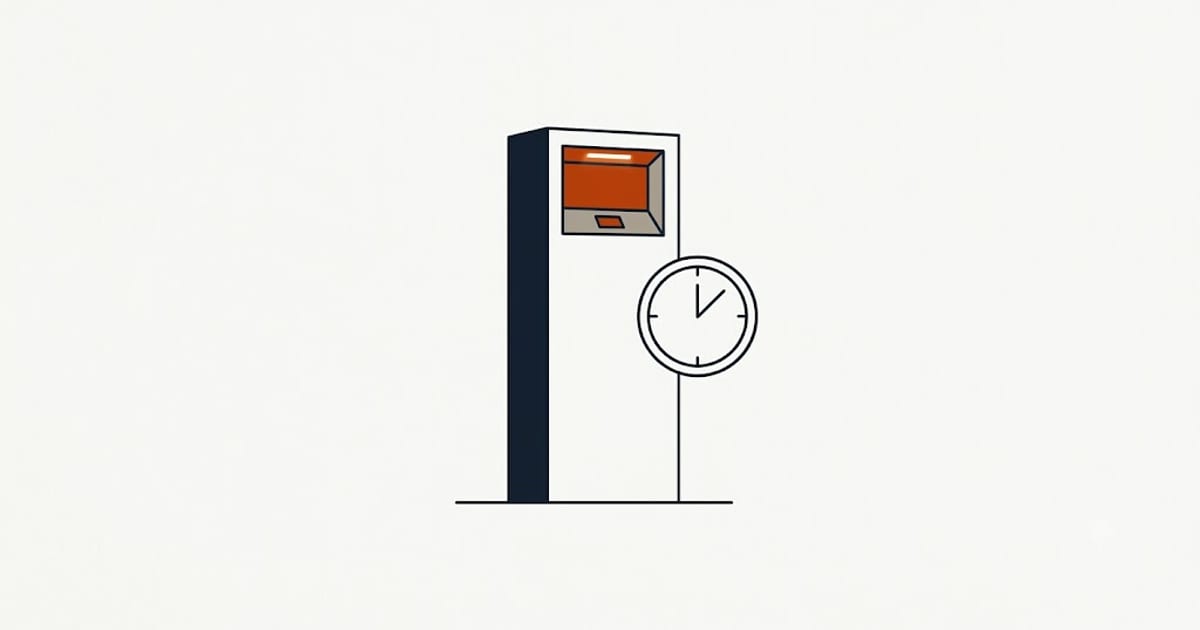
A fridge that goes quiet after a power cut is usually doing something deliberate, not failing.
The restart delay is normal
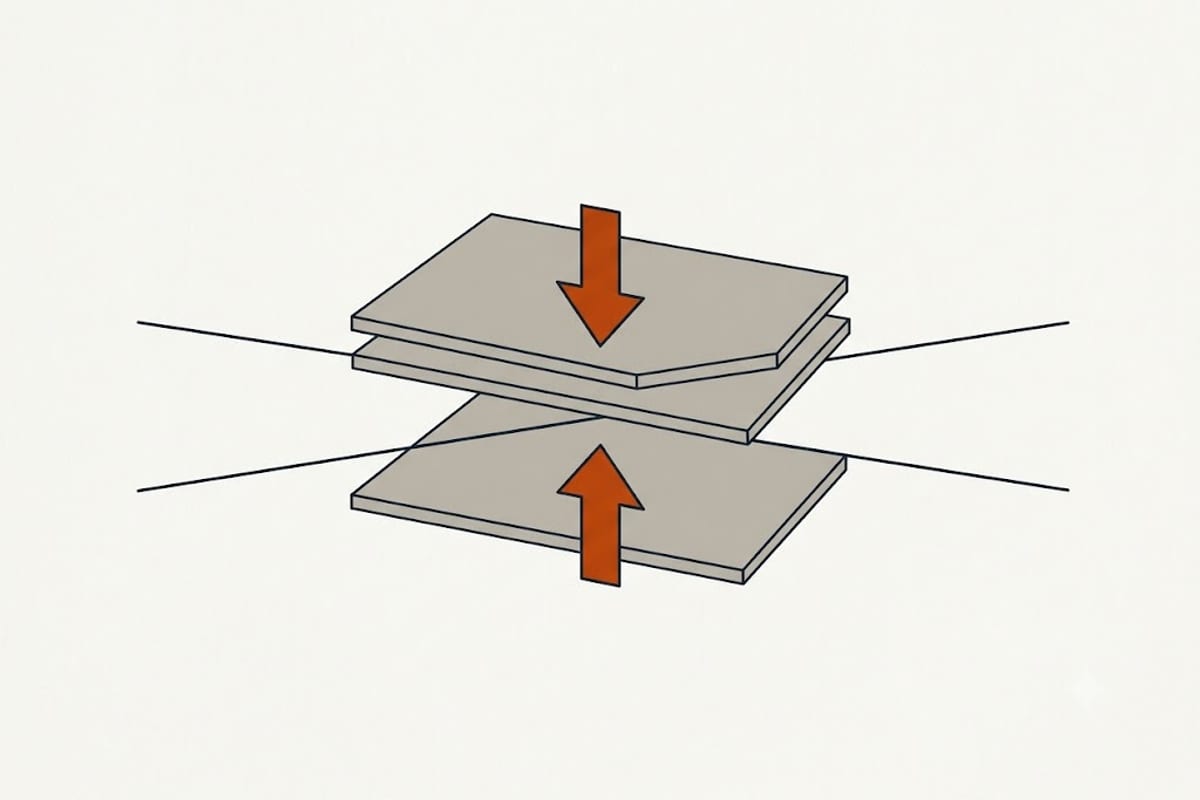
A compressor cannot start against the pressure difference left in the system when it stopped. Trying would stall the motor and trip its overload protector.
So the control waits — typically three to ten minutes — for pressures to equalise. On many models the delay is longer, and after a brief interruption or a rapid off-on-off it can be longer still.
During that time the fridge is silent, the light works, the display works, and everything looks broken.
Wait at least fifteen minutes before concluding anything. Then put a hand near the compressor at the lower back: warm and vibrating means it has started.
Give it hours, not minutes, to recover temperature
Once running, a fridge that has been off for several hours needs time to pull the cabinet back down — commonly four to twenty-four hours depending on how warm it got and how full it is.
A freezer full of food recovers faster than an empty one, because the frozen mass holds cold. Keeping both doors shut during and after an outage makes a large difference.
What the outage can genuinely damage
Power cuts rarely damage compressors directly. What they damage is the electronics, and usually on the way back rather than on the way out — the surge when supply returns is harder on a board than the loss itself.
- The control board. Symptoms: display behaving oddly, buttons unresponsive, fans running constantly or not at all.
- The start relay or capacitor. Symptom: a click every few minutes, a hum, then silence, and no cooling. The compressor is trying and failing.
- The inverter board on variable-speed models.
If the compressor clicks and hums repeatedly without running, stop leaving it powered — repeated stall cycles are hard on the motor.
The reset worth trying
Unplug at the wall for five to ten minutes, then plug back in. This clears a confused control board and forces a clean start sequence. Do not switch it off and on quickly; that produces exactly the condition the delay exists to prevent.
Do it once. If a full reset and half an hour produce nothing, the reset is not the answer.
After it comes back
- Check the freezer contents. Food that has thawed and refrozen is not safe on the assumption that it looks fine. Ice crystals on the surface and a solid centre suggest it stayed largely frozen; a soft package that has refrozen into a block did not.
- Check the ice maker. It may need a full cycle or a manual reset, and it commonly lags the rest of the fridge by a day.
- Listen for new noises. A fan bearing that was marginal before often fails on restart, because a stopped fan has to overcome static friction.
When to call
- Compressor clicking and humming repeatedly with no cooling after a full reset.
- No sound at all after 30 minutes, with the light and display working.
- Display faults or unresponsive controls.
- The fridge runs constantly for more than a day without reaching temperature.
A fridge that is silent for ten minutes after power returns is behaving correctly. One that is silent for an hour is not.
Protecting against the next one
If power cuts are common where you live, the cheap insurance is a surge protector rated for appliance use, fitted between the fridge and the socket. Fridge control boards are the part that fails, and they are among the more expensive parts on a modern appliance.
Some fridges also offer a setting that delays restart deliberately after power returns, precisely to avoid the stall-and-retry cycle described above. If yours has one, leaving it enabled costs nothing.
Food safety, briefly
The usual guidance is that a closed fridge holds a safe temperature for around four hours, and a full freezer for around 48 hours — half that if it is only half full. Every door opening shortens both figures considerably, which is why the single most useful thing during an outage is to leave both doors shut.
After power returns, judge the freezer by whether food still contains ice crystals rather than by how it looks. Anything that has fully thawed and been above refrigeration temperature for hours should be treated as unsafe to refreeze, and the standard advice for anything uncertain is not to take the risk.