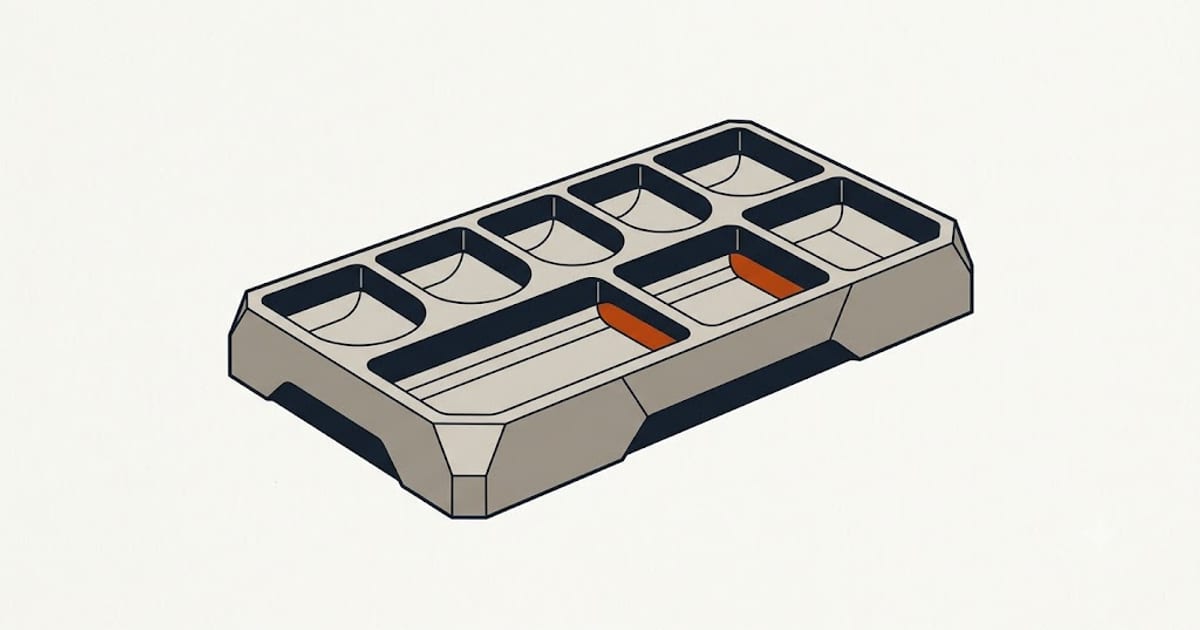
An ice maker does three things in order: it fills with water, it freezes that water, and it ejects the ice into a bin. It fails at one of those three stages, and what is in the tray tells you which.
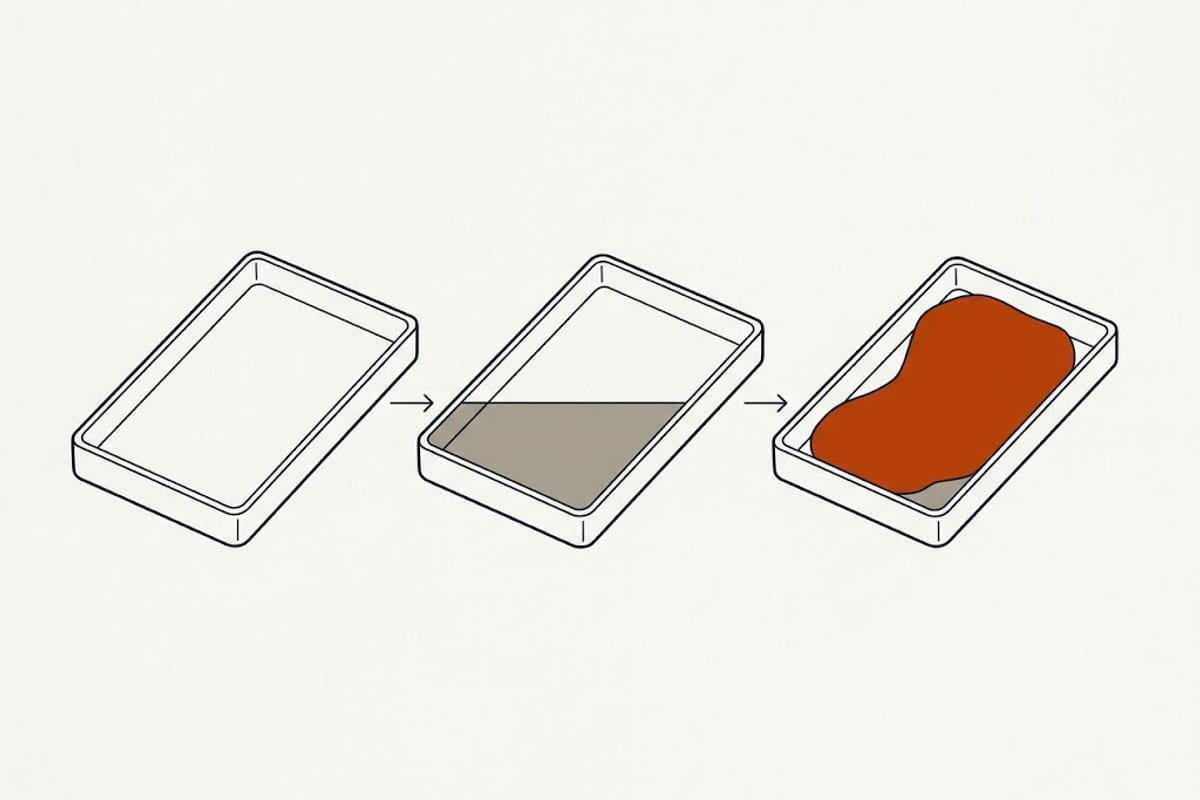
Open the freezer and look before touching anything.
Tray empty and dry — water never arrived
The problem is upstream of the ice maker.
- The supply valve behind the fridge is closed, or was never opened after installation.
- The water line is kinked or frozen. A frozen fill tube is very common, and it usually follows a period when the freezer was set colder than normal or the door was left ajar.
- The inlet valve has failed or is not being energised.
- The water filter is overdue. A clogged filter restricts flow enough that the ice maker cannot fill, while the dispenser still trickles. Filters are typically due every six months, and this is one of the most common causes of the whole complaint.
- The fill tube is blocked with ice from a previous partial fill.
A useful discriminator: does the water dispenser on the door work normally? If it does, water is reaching the fridge and the fault is between there and the ice maker. If it does not, the problem is the supply, the valve or the filter.
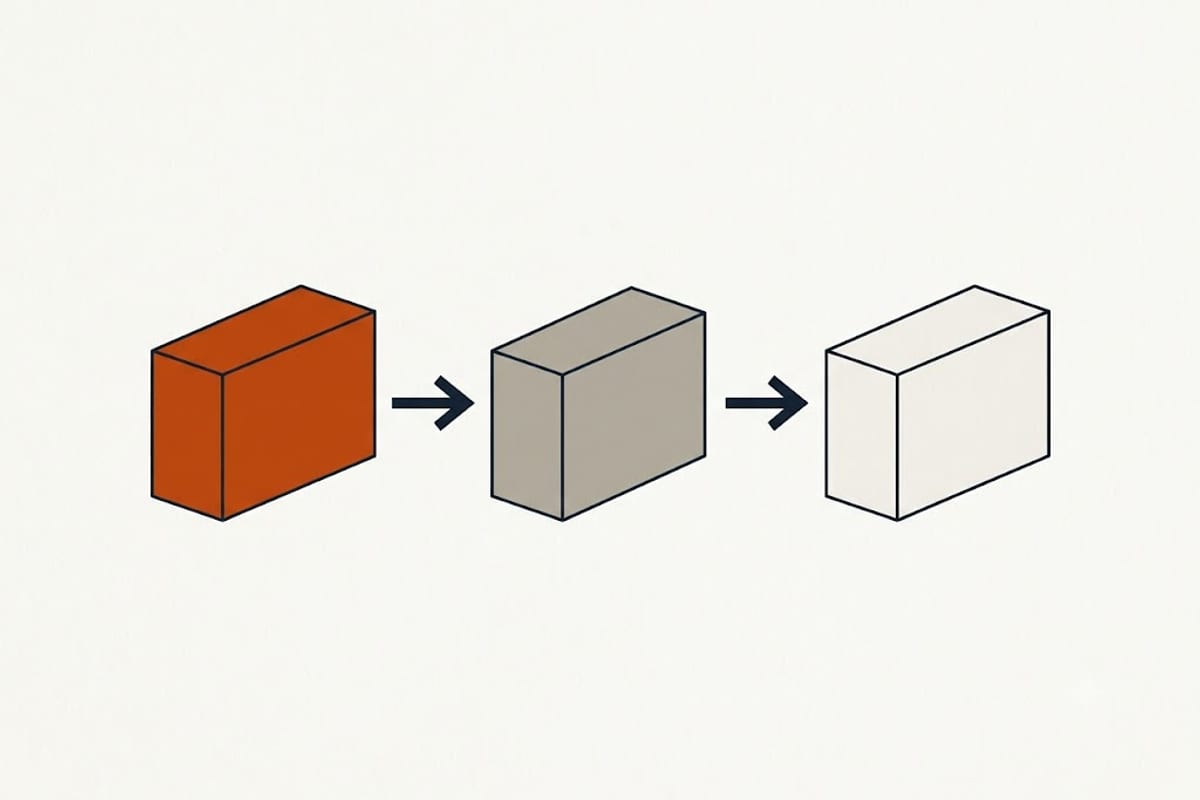
Tray full of water, not frozen — the cold is not arriving
Water got in, so the fill side is fine.
- The freezer is not cold enough. Ice makers typically need around −18 °C to cycle. A freezer running warm will make everything else look normal while never producing ice.
- The thermostat or sensor in the ice maker has failed, so the machine never decides the ice is ready.
- The ice maker is switched off. Many have a wire bail arm or a switch that is easy to knock, and some turn themselves off when the bin is full and stay off if the arm is jammed by a bag of peas.
Tray full of one solid lump, or ice stuck — ejection failed
The freezing worked; the ice is not coming out.
- A partial fill froze over the ejector arm, jamming it.
- The ejector motor or gear has failed, which is the most common mechanical failure on older units.
- Ice bridged in the bin, blocking the chute. This is the most common cause of all in households that use ice slowly: ice cubes sitting for weeks fuse into a solid mass.
Ice that is made but tastes or looks wrong
- Small or hollow cubes — low water pressure, usually a filter.
- Cloudy cubes — normal. Dissolved air, not a fault.
- Ice tasting of the freezer — old ice absorbing odours. Empty the bin and let it remake.
- Grey or black flecks — replace the filter and stop using the ice until it clears.
The reset that solves a surprising number
Turn the ice maker off, empty the bin completely, leave the freezer door closed for a few hours, then turn it back on. This clears bridged ice, lets a frozen fill tube thaw, and forces the control through a full cycle from a known state.
Expect up to 24 hours for normal production to resume, and longer if the freezer was recently opened for a long time or the fridge was moved. A new fridge often takes a day or two before it produces ice at a normal rate, which is regularly mistaken for a fault.
When to stop
Turning valves, changing filters, emptying bins and thawing a fill tube with warm water are owner tasks. Replacing an ice maker module means disconnecting a water line inside a live appliance, and a water line that is not seated correctly will flood a kitchen slowly for weeks before anyone notices.
If the freezer is not holding temperature, fix that first. An ice maker in a warm freezer is not broken.