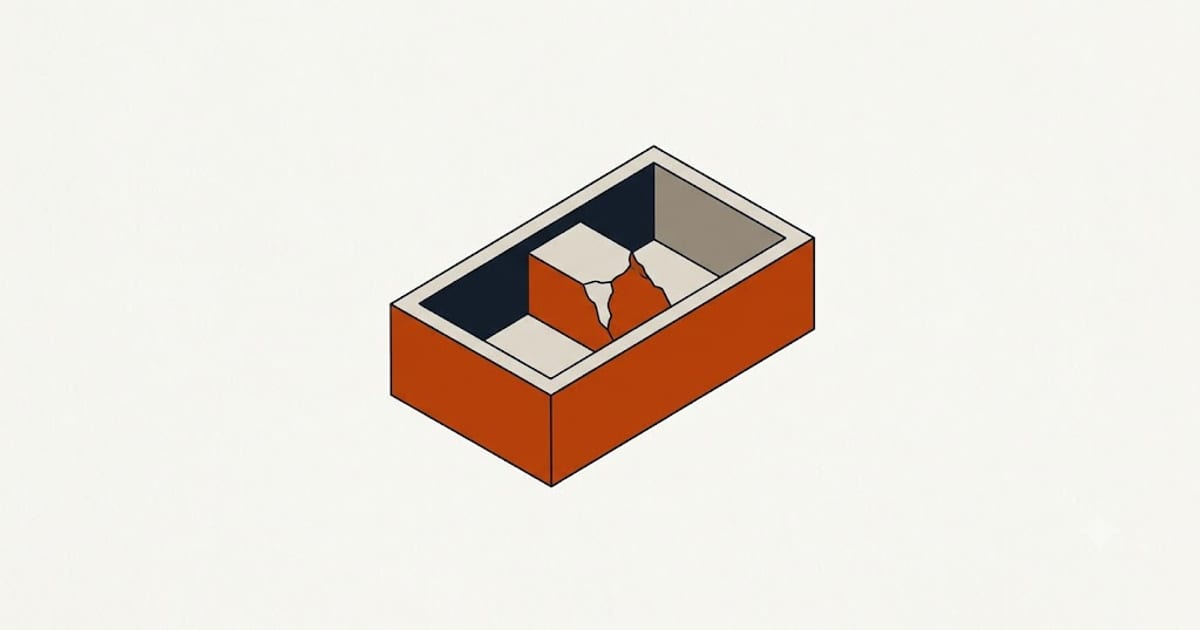
A dishwasher tablet needs three things: to be released, to be hit by water, and to have enough warm water and time to dissolve. An undissolved tablet means one of those did not happen.
1 · The dispenser flap did not open, or opened into something
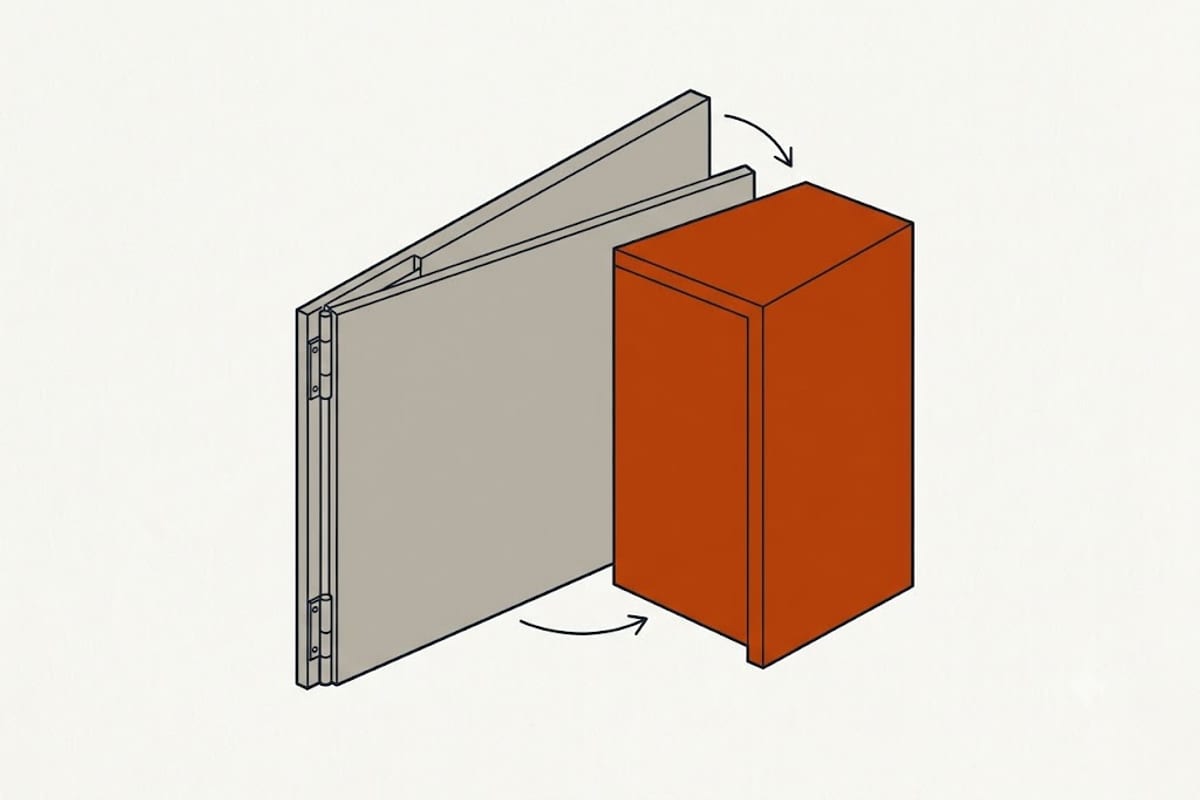
The flap is on the inside of the door and swings open partway through the cycle. A large plate, a baking tray or a chopping board loaded on the lower rack against the door blocks it completely.
This is the most common cause and the easiest to miss, because the load looks fine with the door open — the obstruction only exists when the door is shut.
Check by closing the door slowly and watching what the flap would hit.
Also check:
- The flap catch is not gummed up with old detergent. Wipe the seat and the latch.
- The flap spring still snaps it shut when you close it by hand.
- The compartment is dry when you load it. A damp compartment makes a tablet stick to the base and it will not fall out even when the flap opens.
2 · The cycle was too short or too cold
Tablets are formulated for a full main wash. An eco, quick or rinse cycle may not reach the temperature or duration the tablet needs, and the residue is the result.
- Quick cycles are usually the culprit. They are designed for lightly soiled loads with liquid or powder rather than a wrapped tablet.
- Eco cycles run long but cooler, and some tablets cope with that better than others.
- Cold incoming water in winter, on a machine that is cold-fill only, makes a marginal cycle worse.
If tablets dissolve on a normal cycle and not on a quick one, nothing is broken. Use powder or a liquid gel for short cycles.
3 · Water is not reaching the dispenser
If the flap opens and the tablet still sits there, the spray is not getting to it.
- Spray arms blocked or not turning. Spin them by hand; check the jets are clear.
- Low water level, from a partly closed valve, a kinked hose, or a blocked inlet screen.
- A blocked filter reducing the volume the pump has to work with.
4 · The tablet itself
- Wrapper left on. Most modern tablets have a dissolvable film that does not need removing, but some products still have an outer wrapper.
- Stored badly. Tablets absorb moisture in a damp cupboard and become sluggish or fused.
- Very old stock. They degrade.
Loose tablet in the bottom of the machine
Some people put the tablet straight in the base rather than the dispenser. It dissolves during the pre-rinse, so it is largely gone by the time the main wash starts — and the main wash is the part that needs it.
Use the dispenser. It exists to hold the detergent until the right phase.
White residue rather than an undissolved tablet
Different problem. That is usually limescale or over-dosing, and it points at water hardness, an empty salt reservoir on machines that have one, or rinse aid settings — not at the tablet failing to dissolve.
Rinse aid and salt are separate from the tablet
All-in-one tablets claim to include rinse aid and salt functions, and on soft water they largely do. In a hard water area they often do not keep up, and the symptoms get blamed on the tablet.
If the machine has a salt reservoir, keep it topped up and set the hardness according to your water supply — the setting is usually in the manual and it changes how much water the softener regenerates with. If it has a rinse aid reservoir, keep that filled too even when using all-in-one tablets. Both are cheap, and both do things a tablet cannot.
The distinction matters for diagnosis: an undissolved tablet is a water-delivery problem, while white film on glasses and cloudy dishes is a water-hardness problem. They look related and they are not.
Testing it in one cycle
Run the machine empty on a normal, full-length hot cycle with a tablet in the dispenser and nothing else in the machine. If the tablet dissolves completely, the machine is fine and the problem is loading or cycle choice. If it does not, the fault is in the dispenser, the spray, or the water supply — and you have eliminated half the list in one wash.