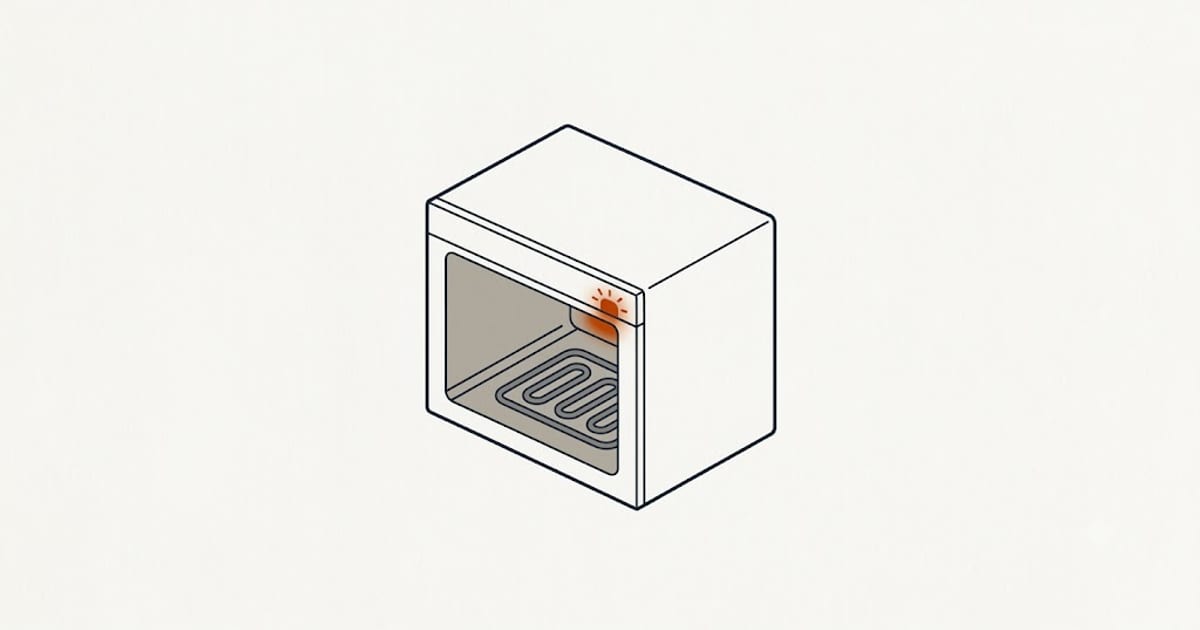
An oven that lights up, accepts settings and runs its fan but never gets hot has lost heat, not power. What comes next depends entirely on the fuel, because gas and electric ovens fail in different places.
Electric: the element or what switches it
Preheat the oven and look inside after a few minutes with the light on. The bake element — the one at the bottom, or hidden under the floor panel on some models — should glow.
No glow at all. Let it cool, then look closely at the element along its whole length.
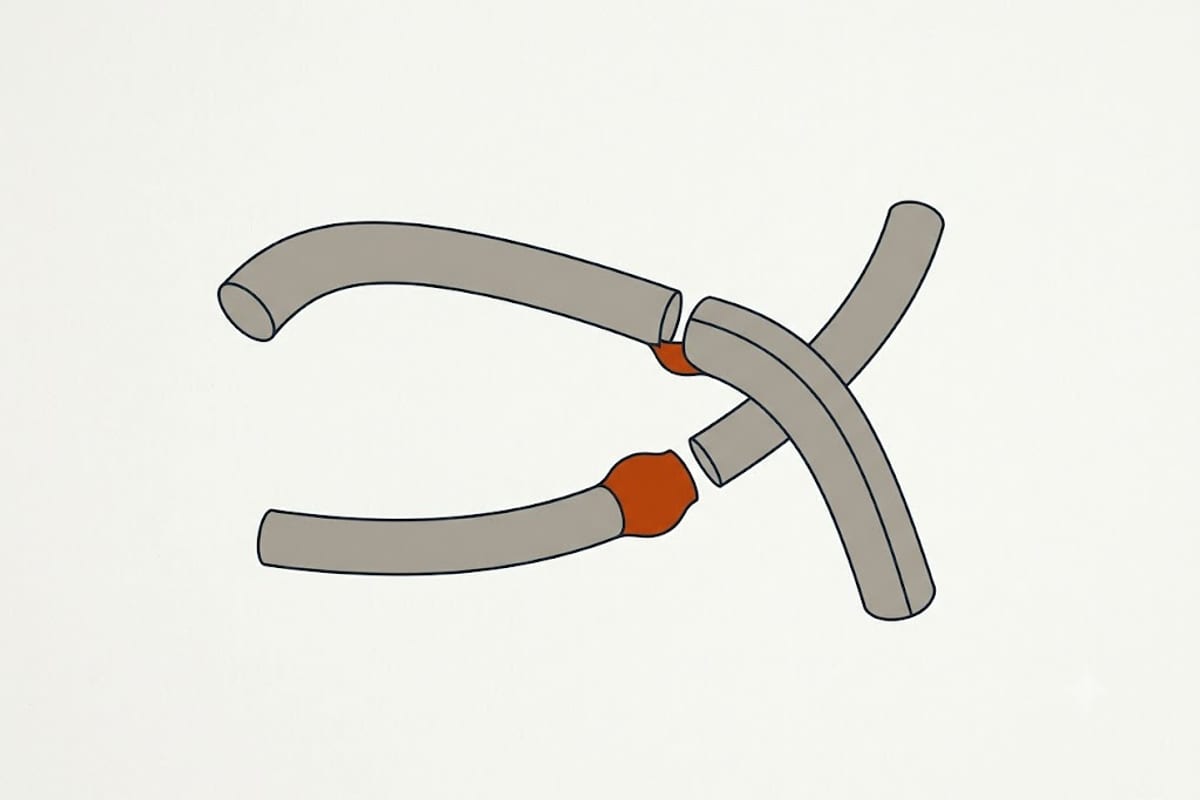
A failed element usually shows a blister, a split, or a bright burnt spot. Elements fail open, so a visible break means the circuit is broken and no current flows. This is the most common electric oven fault and often the most visible one.
Element looks perfect, still no heat. Now suspect what switches it: the relay on the control board, the thermal cutout, or the board itself. Some ovens use separate elements for bake and grill; if the grill works and bake does not, the shared parts are fine and the bake element or its relay is the fault.
Heats but slowly, or never reaches temperature. Usually a failing element, a door seal letting heat out, or a temperature sensor reading wrong. A sensor reading high tells the oven to stop heating too early.
Gas: listen to the sequence
A gas oven ignites in stages, and the stage where it stops tells you what failed.
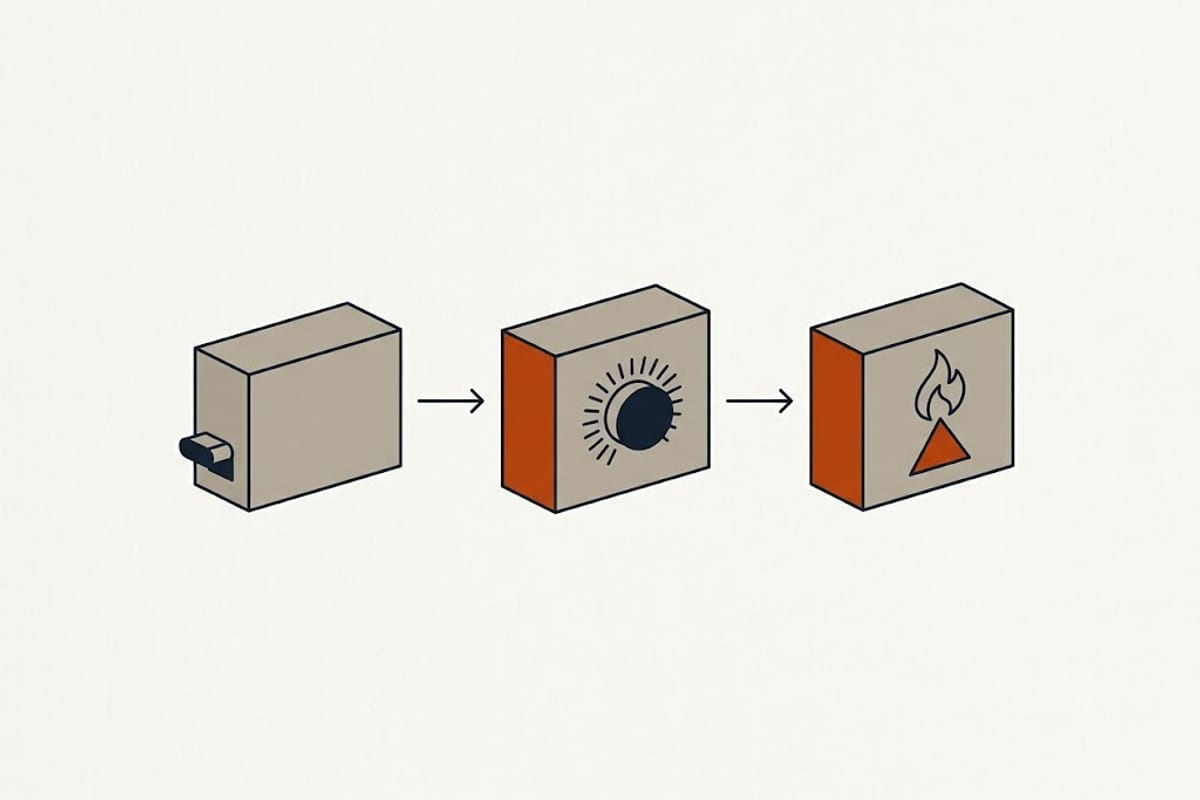
- Click, click, then silence, no flame. The igniter is working but the gas valve is not opening — or, on hot-surface systems, the igniter is glowing but not drawing enough current to open the valve. A weak igniter that still glows is a classic and confusing fault: it looks fine and does not work.
- Nothing at all — no click, no glow. No power reaching the ignition circuit. Often a thermal fuse or a switch.
- Flame lights, then goes out after a few seconds. The flame sensor is not confirming the flame, so the control shuts the gas off. This is a safety function doing its job.
- Flame lights but is small, yellow and lazy. A gas supply or burner port problem, not an ignition problem.
The weak-igniter case is worth emphasising because it defeats the obvious test. The igniter glows, so it looks good, but on these systems the igniter is also the current-sensing element that opens the valve. It has to draw enough current, not just look hot.
Check before opening anything
- The clock and timer. Many ovens will not heat if a cook timer is set to a mode that delays start. Cancel any timer programme.
- Child lock or demo mode. Both stop heating with everything else working.
- The breaker. An electric oven on a split supply can lose one leg: the light and clock work on the remaining leg while the elements get nothing.
- A recent power cut. Some boards need a full power-off reset — off at the wall for a minute — before they behave.
When to stop
Oven elements sit on mains voltage inside an earthed metal cavity, and gas valves are a gas fitting. Replacing a bake element is within reach of a careful owner on many models. Anything on the gas side is not — in most places it is a legal requirement that gas appliance work is done by a registered person, and the flame sensor exists precisely because unburnt gas is dangerous.
This page describes how ovens fail. It does not tell you which part failed in yours.