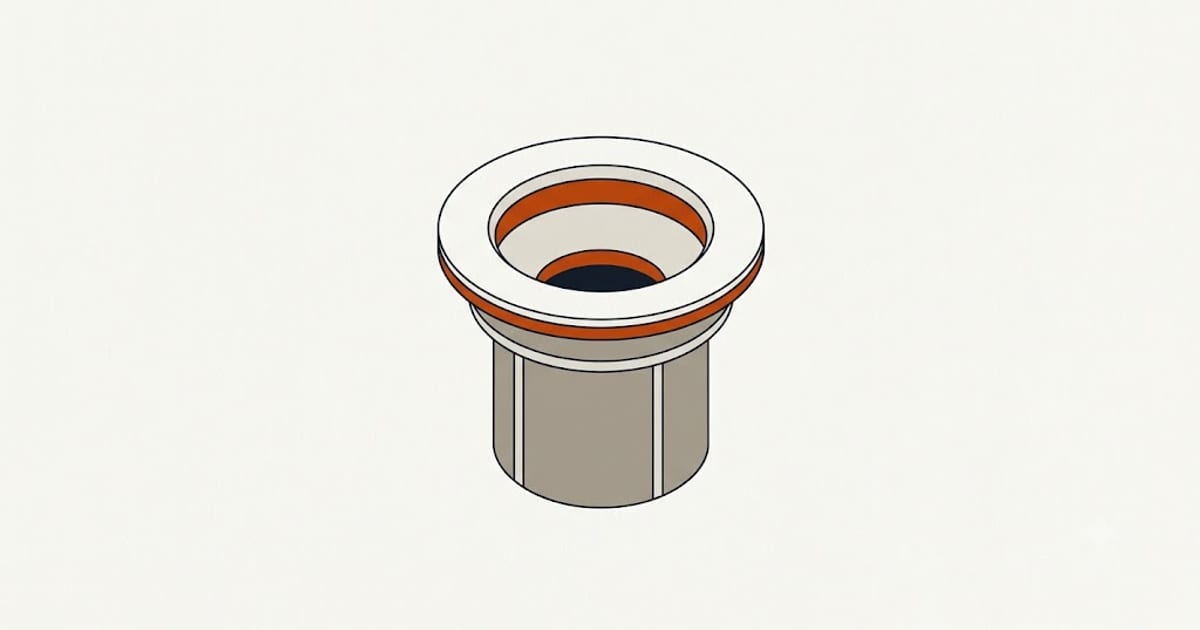
A waste disposal that hums when switched on is telling you two useful things at once: it has power, and its motor is trying to turn. Neither of those is true of a unit that does nothing at all.
What remains is that something is stopping the grinding plate from rotating, and the motor is stalled against it. Left running in that state the motor overheats within seconds, so the first thing to do is switch it off at the wall.
The hex socket exists for this
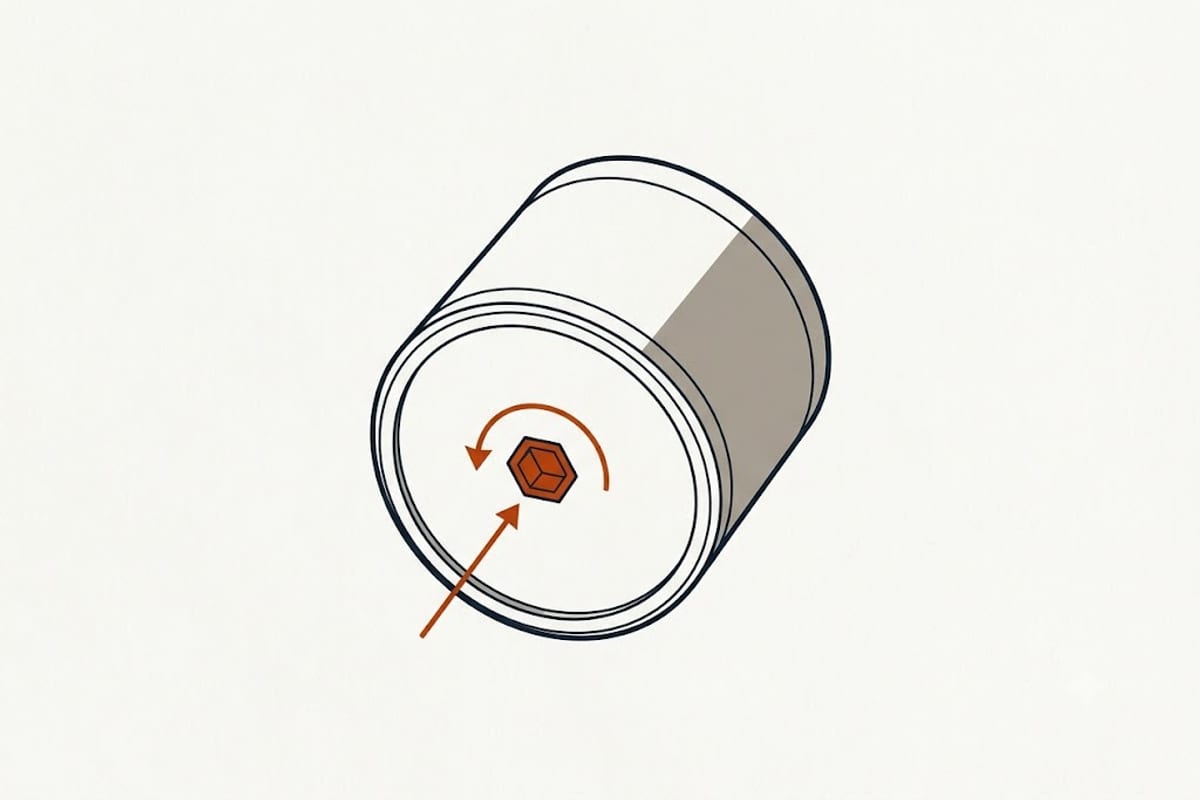
Almost every disposal has a six-sided socket in the centre of its underside, and most are supplied with a small hex key that fits it. Its only purpose is freeing a jam.
With the power off at the wall — not merely switched off at the wall switch — insert the key and work it back and forth. You are trying to rock the plate past whatever is wedged against it rather than force it in one direction. When it turns a full revolution freely in both directions, the jam has cleared.
If the key is long lost, the handle end of a broom pushed against one of the impellers through the drain opening does the same job. Never put a hand inside the chamber, even with the power off.
Then find what caused it
Once the plate turns, look into the chamber with a torch and remove whatever was in there with tongs or pliers. Common culprits are bones, fruit stones, cutlery that fell in, twist ties, and the metal caps from bottles.
Fibrous material — celery, artichoke, corn husks, onion skins — does not jam so much as wrap, and it binds around the shredder ring rather than sitting loose. Grease and coffee grounds do not jam the plate at all but they block the drain below it, which produces a different complaint.
The reset button
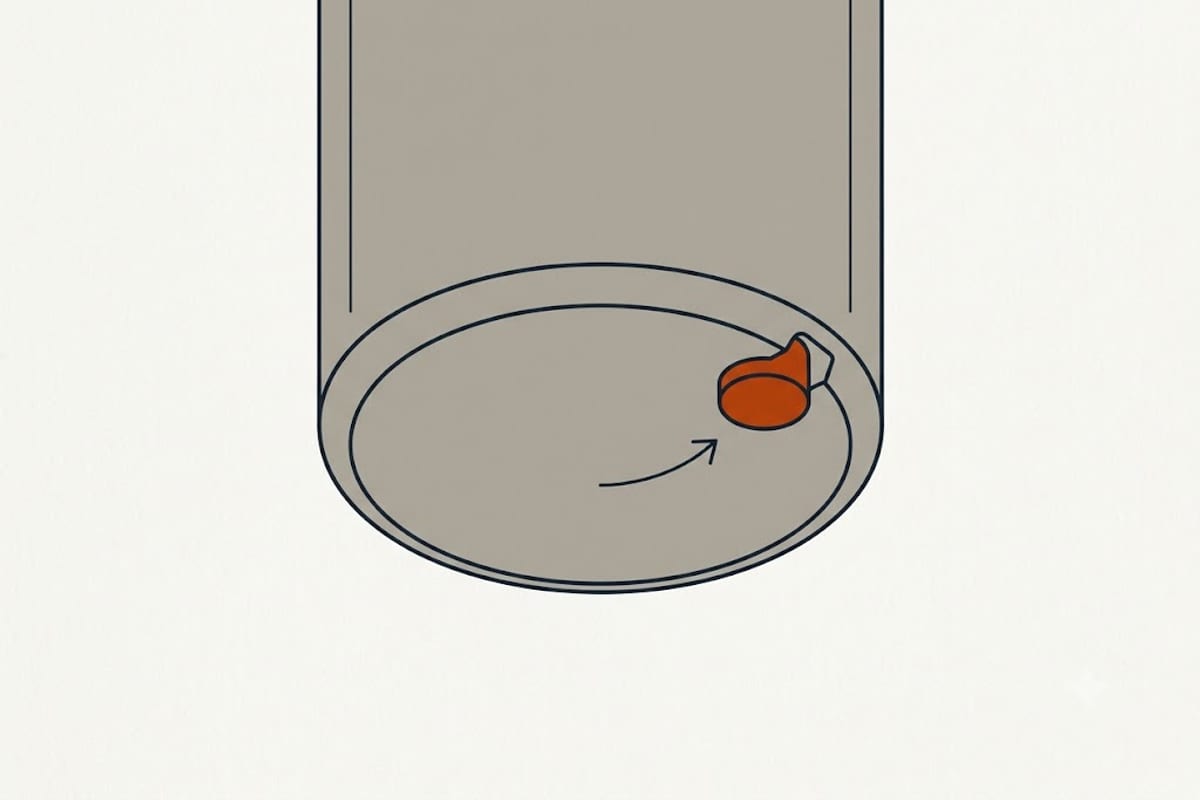
Stalling trips a thermal overload, which is a small button on the underside of the unit, usually red. After clearing a jam the disposal will do nothing at all until that button is pressed back in.
Let the unit cool for a few minutes first. If the button pops straight back out when the disposal is run, something is still jamming it and forcing it repeatedly will damage the motor.
Nothing at all rather than a hum
A silent disposal is a different fault. Check the wall switch, the breaker, and the reset button in that order. If all three are fine and there is still no sound, the motor or the switch has failed, and a unit that has done ten or fifteen years of service is usually replaced rather than repaired.
Water backing up rather than a jam
If the plate turns freely and the motor runs but water sits in the sink, the blockage is downstream in the waste pipe rather than in the disposal. Grease is the usual reason, and it accumulates over months rather than arriving in one meal.
A related and frequently missed case: on kitchens where the dishwasher drains into the disposal, a disposal fitted new must have its inlet knockout plug removed during installation. If that was missed, the dishwasher can never drain, and the symptom looks like a dishwasher fault rather than anything to do with the disposal.
Habits that prevent most jams
Run cold water before, during and for a few seconds after use, and feed material in gradually rather than filling the chamber and switching on. Cold water keeps fats solid so they are ground and carried away rather than melting and coating the pipe further down.
Keep bones, fruit stones, fibrous vegetable waste and anything starchy in quantity out of it. Grinding a handful of ice occasionally does no harm and helps clear residue from the impellers.