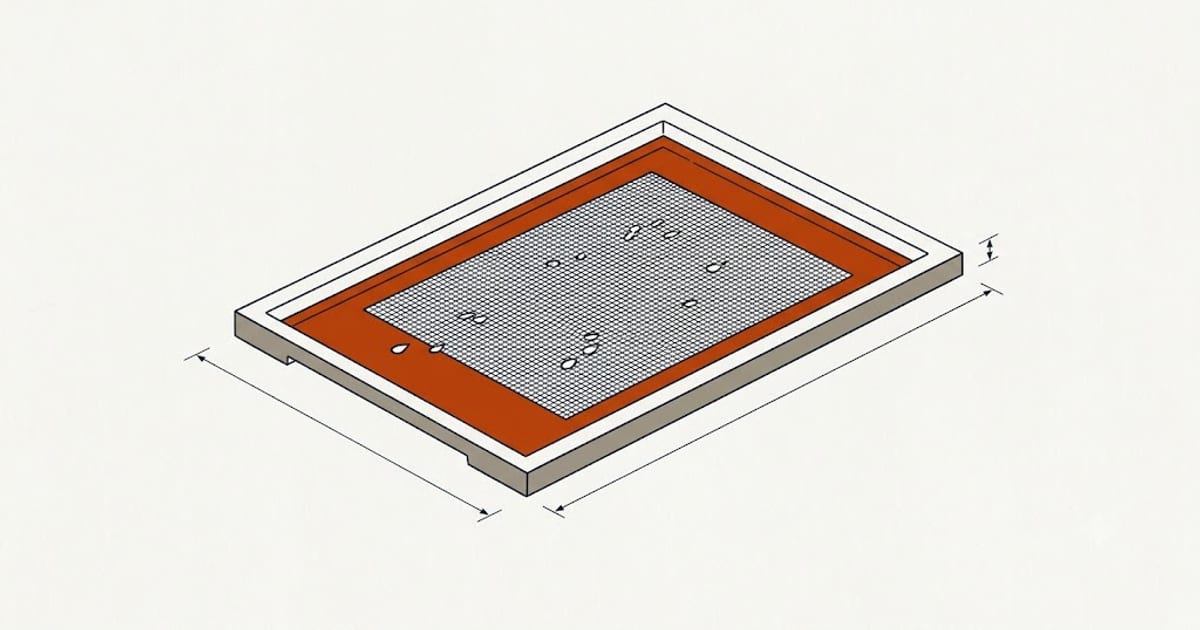
A lint filter should be dry, or very nearly. Water on it means damp air is condensing before it leaves the machine, and on a vented dryer that has one meaning: the air is not getting out fast enough.
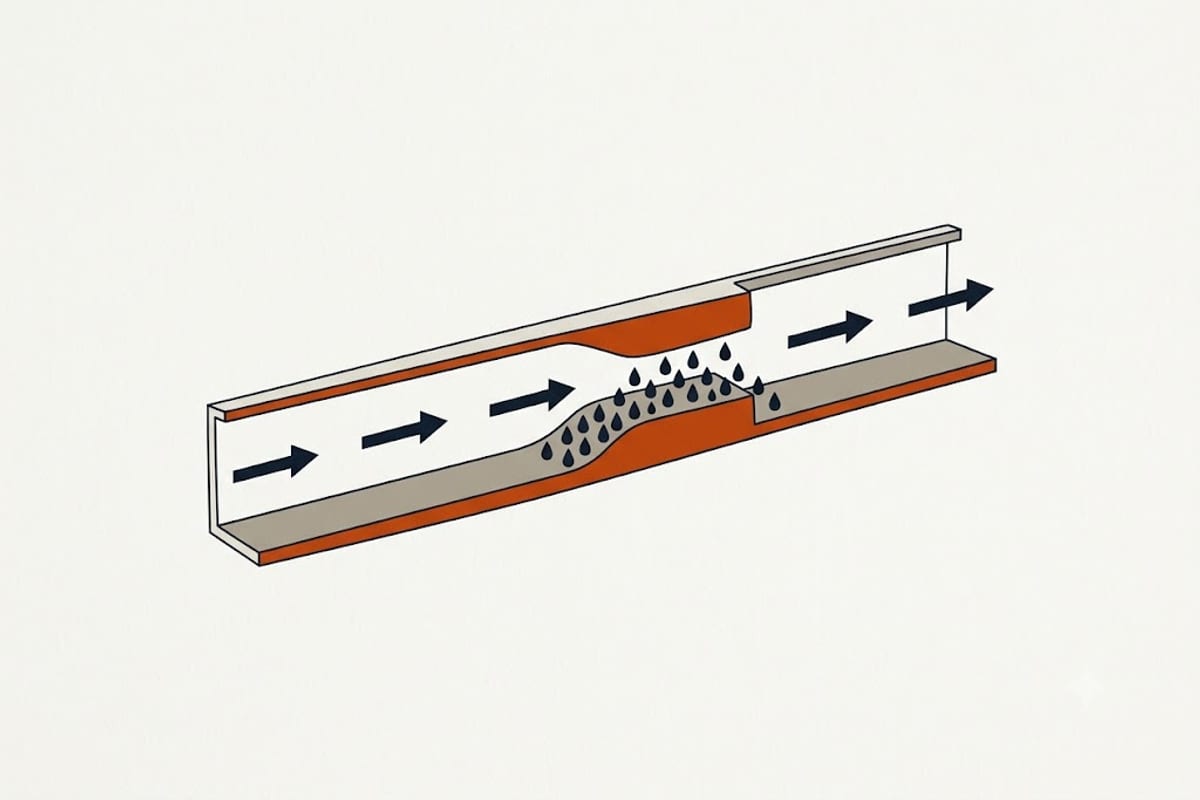
This is worth acting on because it appears before the drying times get bad. By the time a load takes two cycles, the restriction has been building for months.
Vented dryers
- A restricted or blocked duct. Lint accumulates on the inside, the cross-section shrinks, and air slows enough to drop its moisture on the way out.
- A cold duct run. Ducts crossing an unheated garage or loft cool the air below its dew point. This is seasonal — it appears in November and stops in April, which is a very recognisable pattern.
- A long duct with several bends. Each bend adds resistance equivalent to a length of straight pipe, and a route with three or four corners can exceed what the fan is designed for.
- A sagging flexible duct. Any dip fills with condensate and then blocks the airflow with water.
- A blocked or frozen outside flap.
The filter itself
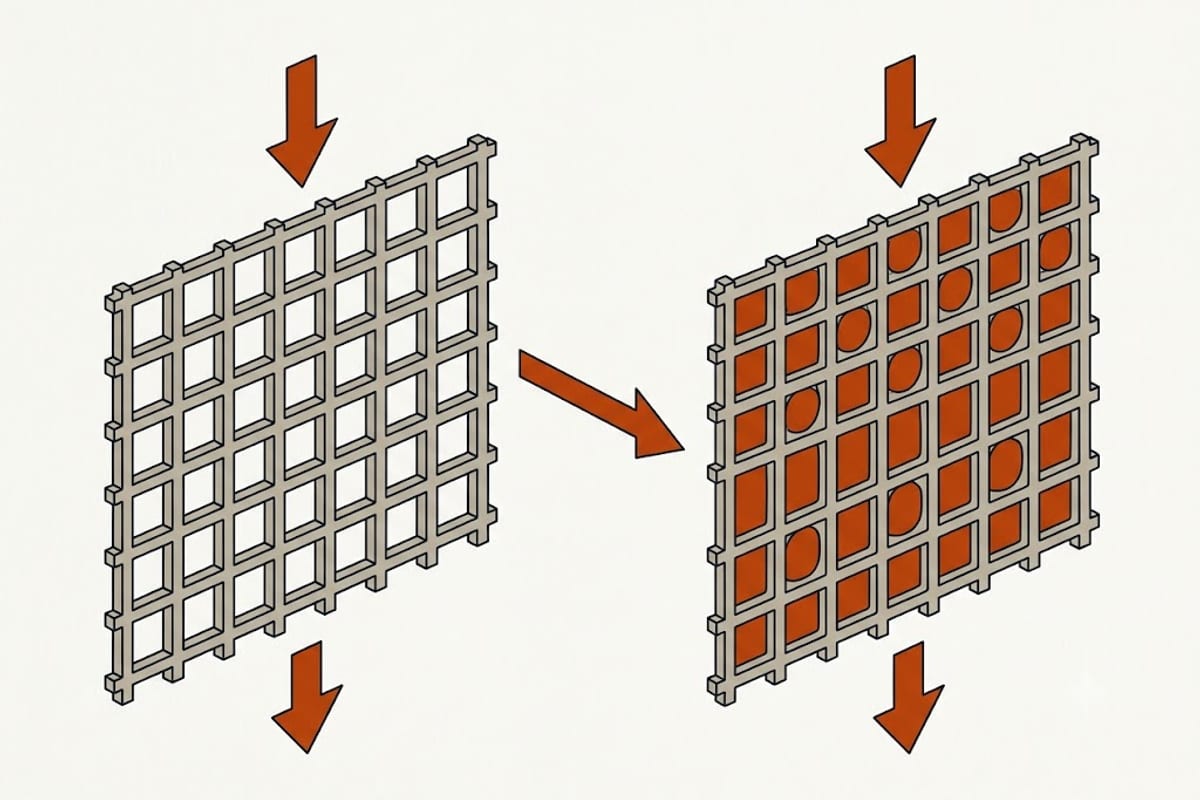
A filter can look perfectly clean and still be blocked. Fabric softener sheets leave an invisible film across the mesh that stops air passing.
The test takes ten seconds: hold the filter under a running tap. Water should pour straight through. If it pools or beads on the surface, scrub both sides with a soft brush and washing-up liquid, rinse, and dry it before putting it back.
Do this every few months if you use softener sheets.
Condenser and heat pump dryers
Here some moisture around the filter area is normal — the machine condenses water inside by design. What is not normal:
- Water pooling rather than a light film.
- A full tank the machine has not warned about.
- A blocked condenser unit, which on many models is a removable block of fine fins that clogs with lint and needs rinsing.
- On heat pump models, a blocked secondary filter below the door filter. These clog faster than owners expect and are the most common cause of poor performance on that type.
Why not to leave it
Restricted airflow means the cabinet runs hotter than designed. Over time that stresses the thermostats, and eventually the one-shot thermal cutout opens — at which point the dryer runs cold and needs a part fitted.
So the sequence is predictable: wet filter, then longer cycles, then no heat at all. Clearing the duct at the first stage prevents the third.
There is also a fire consideration. Lint is highly flammable, and a restricted duct concentrates both lint and heat. This is the main reason dryer ducts are worth cleaning on a schedule rather than when something goes wrong.
What to do this week
- Wash the filter under a tap and check water passes through.
- Vacuum the filter housing slot.
- Disconnect the duct at the machine and check it is clear along its length.
- Run the dryer and check for strong warm airflow at the outside vent.
- Shorten, straighten or insulate the duct if it is long, kinked or cold.
None of that needs a part, and it resolves the large majority of wet-filter complaints.
Rigid duct versus flexible duct
The material the duct is made from makes more difference than almost anything else, and it is rarely the thing people change.
Rigid smooth-walled metal duct has the least internal friction and almost nothing for lint to catch on. Semi-rigid aluminium is a reasonable compromise where a short flexible section is unavoidable. Flexible foil and plastic concertina duct is the worst of the options: every ridge catches lint, the material sags between supports, and the sags become water traps.
If a dryer has always dried slowly since it was installed, and the duct is a long run of concertina foil looped behind the machine, that is very likely the whole explanation. Replacing it with rigid duct and keeping the run as short and straight as possible often halves the drying time without touching the machine.
How often to clean it
For a household doing several loads a week, once a year is a reasonable interval, and twice a year if the run is long or the machine is used heavily. Cleaning is not complicated — disconnect at both ends, push a brush through, and vacuum what falls out.
The wet filter is the signal that the interval has been too long.