
A washing machine that smells has a biofilm problem — a layer of detergent residue, fabric softener, body oils and the bacteria that live on them. The reason drum cleaners disappoint is that the drum is the one place that gets scrubbed by every wash.
The smell is somewhere else.
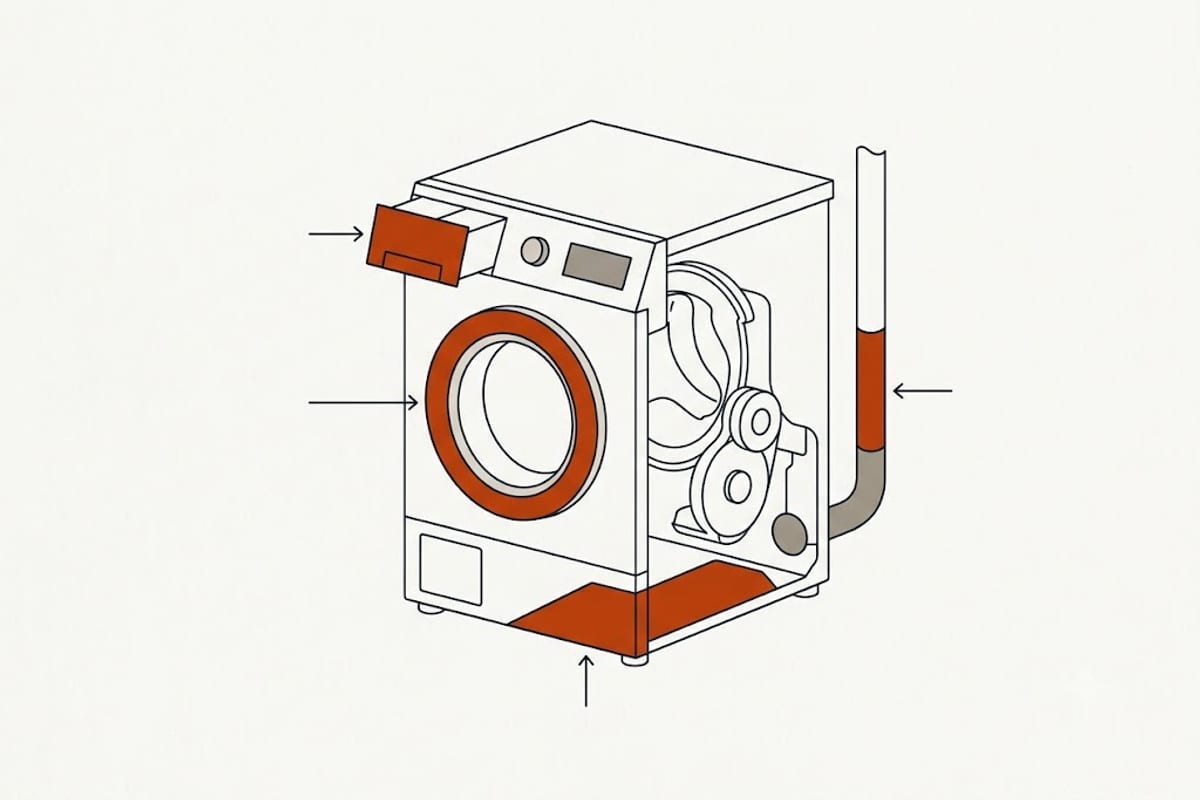
The four places it actually lives
The door seal. On a front-loader, the rubber boot has a fold in it that holds water permanently. Pull it back and look at the bottom of the fold. This is where most of the smell comes from, and it needs wiping by hand — no cycle reaches inside a fold.
The detergent drawer. Take it out completely. The housing it slides into is usually worse than the drawer itself, and it rarely gets touched.
The sump and filter. Water always remains here. On many machines it is the same filter you check when the machine will not drain.
The drain hose. If the machine has drained badly at any point, the hose holds residue too.
Why it got worse recently
Two changes drive nearly all of it.
Cold washing. Modern detergents work at 30 °C and below, which is better for fabric and energy — and worse for biofilm. Fats and oils do not fully dissolve at low temperatures, so residue builds instead of being flushed away.

Too much detergent, and liquid rather than powder. Excess surfactant does not rinse out; it feeds the film. Powdered detergents containing an oxygen bleach are markedly better at preventing this than liquids, which contain none.
Fabric softener adds to it directly — it is designed to leave a coating behind.
What actually clears it
- Wipe the seal by hand, pulling the fold back, with a cloth. Do this first; nothing else substitutes.
- Remove and wash the drawer and its housing.
- Clean the filter and sump.
- Run an empty cycle at the hottest setting, with either a machine cleaner or a measure of powdered oxygen-bleach detergent. This step is last, not first.
Vinegar is popular advice and it is a poor choice here: it is weak against biofilm and it degrades rubber seals over time. Bleach kills bacteria but does not remove the film they live in, so the smell returns.
Keeping it away
- Leave the door and the drawer open between washes. This one habit prevents more than everything else combined.
- Run one hot wash a month, even if all your laundry is cold.
- Use less detergent than the cap suggests, and use powder for at least some loads.
- Skip fabric softener, or use it rarely.
- Take laundry out promptly. Wet washing left in the drum for hours reseeds everything you just cleaned.
When it is not biofilm
- A sewage smell rather than a musty one points at the drain connection — a missing trap, or a hose pushed too far into the standpipe.
- A burning smell is not a cleaning problem. Stop using the machine and have it looked at.
- A smell that appeared suddenly, with poor draining, is a blockage holding dirty water.
Why front-loaders smell more than top-loaders
The difference is not build quality. It is water volume and geometry.
A front-loading machine uses far less water per cycle, so detergent is more concentrated and rinsing is less thorough. It also has a horizontal drum with a rubber boot sealing the door, and that boot has a fold that holds water indefinitely. A top-loader has neither the fold nor the low water volume, which is why the complaint is so much more common on front-loaders.
None of that means a front-loader is worse. It means the maintenance is different, and most owners were never told it existed.
How long it takes to clear
A machine that has smelled for months will not be fixed by one hot cycle. Expect to wipe the seal, clean the drawer and the filter, then run two or three hot cycles over a fortnight before the smell stops returning. If it comes back within a week of that, something was missed — usually the drawer housing or the sump.